
Arsenic (As) is a naturally occurring element found in the Earth’s crust and represents one of the most significant challenges for modern public health and environmental engineering.
It is rarely found in its pure state. It is generally associated with metals such as gold, silver, copper, and iron, forming other minerals, such as arsenopyrite, realgar, and orpiment, among others.
Although its notoriety primarily links it with potent poisons, this element has multiple industrial and everyday applications that, paradoxically, contribute to its dispersal in the environment:
• Agriculture: It has been used in the manufacture of pesticides, insecticides, herbicides, and fungicides.
• Technology and Electronics: It is a key component in the manufacturing of semiconductors. It has been used in cell phones, solar panels, and LEDs.
• Other Industries: It is used in the manufacturing of glass, pigments, pyrotechnics, alloys for ammunition and batteries, and even in the tanning industry for leather preservation.
Impacts of Arsenic on Health
Arsenic, also called the “king of poisons,” is toxic even at very low levels, and its damage is cumulative and irreversible over the years. The effects after ingestion include:
- Cancer: The United States Environmental Protection Agency (EPA) and the WHO classify arsenic as a confirmed human carcinogen. It is linked to cancer of the skin, bladder, lung, kidney, liver, and prostate. In Mexico, a risk of 13,070 new cancer cases in arid states was calculated due to this exposure.
- Skin Lesions: These are the most characteristic symptoms and include hyperpigmentation (darkening of the skin), hypopigmentation (light spots), and hyperkeratosis (thickening of the skin on palms and soles), and even Blackfoot Disease, which is a serious condition reported in areas with high concentrations, involving the blockage of arteries in the lower limbs and gangrene.
- Cardiovascular Problems and Diabetes: It has been associated with hypertension, hardening of the arteries (atherosclerosis), and type 2 diabetes mellitus.
- Neurotoxicity: It can cause damage to the nervous system, memory problems, decreased IQ in children, and peripheral neuropathies.
- Risks in Pregnancy and Infancy: It increases the risk of spontaneous abortion, low birth weight, and developmental defects. Children are especially vulnerable because they consume more water per unit of body weight than adults do.
Finally, research suggests that arsenic activates a persistent inflammatory response in the body that does not cause immediate pain but silently damages organs such as the lungs, liver, kidneys, pancreas, arteries, and brain, eventually leading to serious illnesses.
How Does Arsenic Enter Our Body?
This element can enter the human body through different main routes.
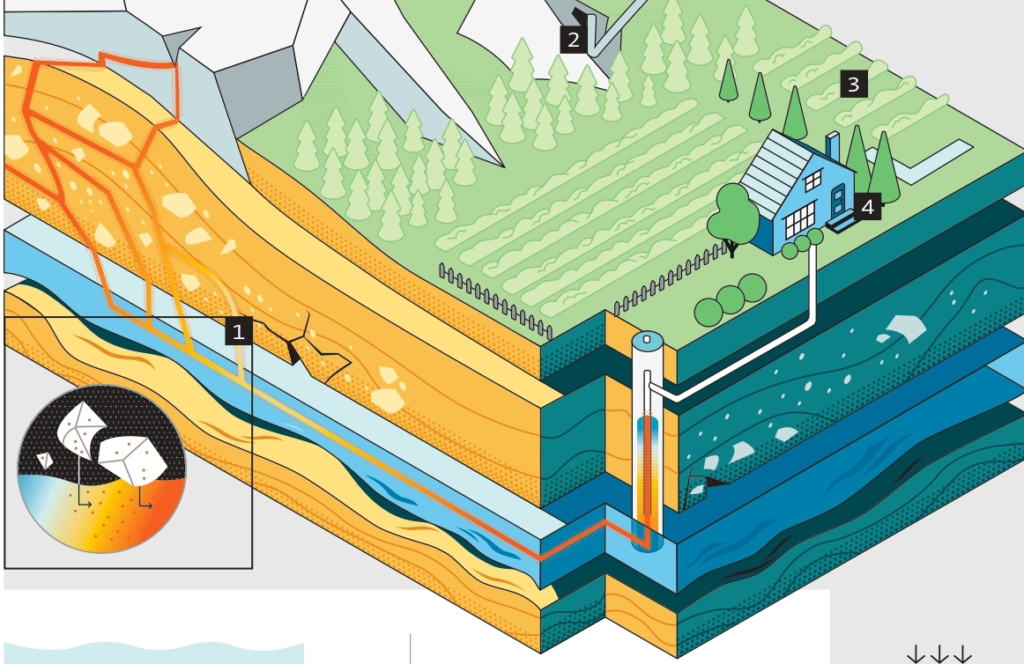
Water Ingestion (Main Route). Direct consumption of contaminated groundwater is the most common source, especially in arid areas where arsenic naturally dissolves from volcanic rocks and soils.
Arsenic enters drinking water mainly through natural processes, such as the weathering of volcanic rocks and geothermal activity, as well as through anthropogenic activities, such as mining and metal smelting.
It is estimated that 140 million people in at least seventy countries have been drinking water containing arsenic at levels above the WHO provisional guideline value of 10 μg/L.
Likewise, it enters the body when cooking foods that absorb a lot of water (such as rice, pasta, beans, and soups), or when preparing coffee, tea, and juices. The use of contaminated water to prepare infant formula or baby food represents a critical risk.
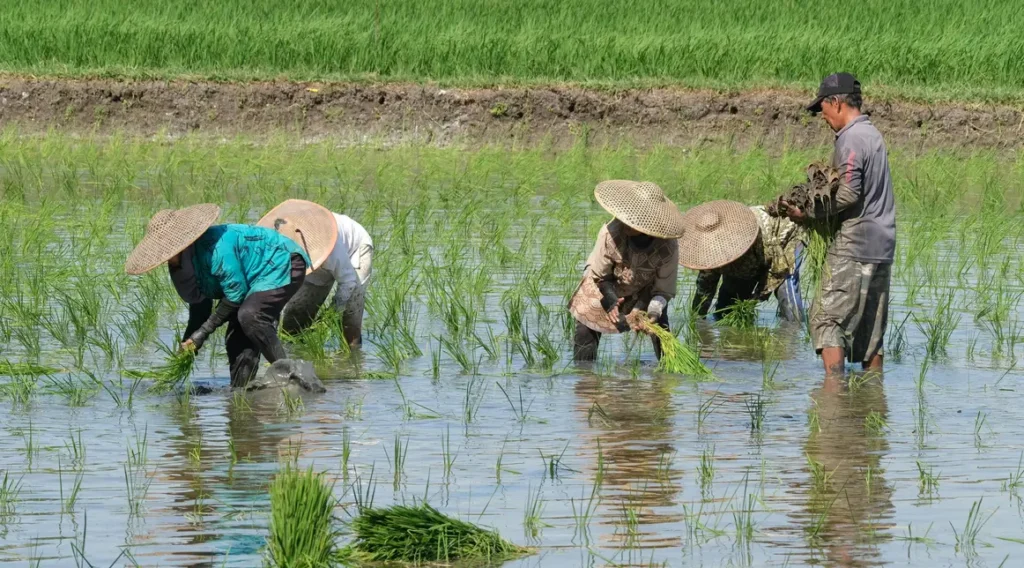
Food Ingestion. Food can be contaminated by irrigation with contaminated water or by bioaccumulation.
- Agricultural Crops: Products irrigated with contaminated water, where arsenic can accumulate in roots, leaves, and, to a lesser extent, in fruits or seeds.
- Animal Products: Meat, poultry, and milk from livestock that were fed contaminated water or food.
- Processed Foods: Bottled beverages or cereals that may have been processed with contaminated water.
Air and Inhalation. Arsenic can be present in the air as fine particles or gases, mainly from industrial dusts and gases, especially during metal smelting, energy production, or mining, which generate dusts and vapors rich in arsenic.
Furthermore, smoking is a recognized source of exposure due to tobacco smoke. Finally, burning fuels, wood treated with arsenic preservatives, or coal can release the metalloid into the air.
Other Sources. The risk of contact with arsenic is increased by various products and human activities. Historically and currently, the use of pesticides and herbicides containing arsenic is an important source.
Occupational risk is present in specific industries such as glass, semiconductor manufacturing, tanning (leather preservation), textile, paper, pigment, and pyrotechnics. Finally, mining for gold, silver, copper, and lead is a significant cause, as these processes release arsenic, directly exposing workers and surrounding communities.
Recommendations According to the Arsenic Level in Water
| Arsenic level | Recomendation |
| Up to 5 ppb (µg/L) 0.001 mg/L | Safe for all uses |
| 5-9.9 ppb (µg/L) 0.005-0.0099 mg/L | Not recommended for infant formula or baby food. Pregnant women, immunocompromised people, and young children should avoid using untreated water (including drinking, mixing in beverages, cooking, washing fruits and vegetables, or food preparation). |
| 10 ppb (µg/L) 0.01 mg/L | Public water system limit. If it were a public water supply, the system would actively treat the water to reduce arsenic levels. |
| 10-99.9 ppb (µg/L) 0.01-0.0999 mg/L | Not safe for human, pet, or livestock consumption (including drinking, mixing with beverages, cooking, washing fruits and vegetables). It is safe for other household uses (bathing, dishwashing, laundry, and garden irrigation). |
| 100-499.9 ppb (μg/L) .1-.49 mg/L | The same restriction as the previous one. Not safe for garden irrigation. Yes, it is safe for other household uses (bathing, dishwashing, laundry, and garden irrigation). |
| 500+ ppb (µg/L) 0.5 mg/L | Not safe for any use. |
The presence of arsenic in water at levels exceeding regulatory limits is a serious and urgent public health problem in various regions of Mexico and the world. This situation exposes populations and underscores the need for practical solutions.
It is fundamental that responsibility for ensuring safe water is shared among authorities, companies, and society, and that proven, reliable technologies be adopted.
Given this panorama, it is indispensable to implement efficient and sustainable water purification solutions.
In this context, Zeomedia offers industrial and governmental projects GEH, a high-capacity filter medium designed for the safe, economical, and reliable removal of arsenic. This technology not only ensures water quality suitable for human consumption but also guarantees compliance with applicable regulations.
Sources
- Del Razo, L. M., Ledón, J. M., & Velasco, M. N. (Eds.). (2021). Hacia el cumplimiento del Derecho Humano al Agua. Arsénico y fluoruro en agua: riesgos y perspectivas desde la sociedad civil y la academia en México. Ciudad de México: Universidad Nacional Autónoma de México, Instituto de Geofísica.
- Alarcón Herrera, M. T., Martín Domínguez, A., & Martín Domínguez, I. R. (Coords.). (2013). Flúor y arsénico en agua de consumo humano, retos y perspectivas. Chihuahua, México: Centro de Investigación en Materiales Avanzados (CIMAV) / Red Temática del Agua CONACYT. ISBN: 978-607-8272-11-2.
- Mendoza-Cano, O., Sánchez-Piña, R. A., Barrón-Quintana, J., Cuevas-Arellano, H. B., Escalante-Minakata, P., & Solano-Barajas, R. (2017). Riesgos potenciales de salud por consumo de agua con arsénico en Colima, México. Salud Pública de México, 59(1), 34-40.
- Munguía-Lara, A., Hernández Martínez, J. L., & Martínez Villegas, N. V. (s.f.). Arsénico en el agua potable en México. División de Geociencias Aplicadas, IPICYT.
- Núñez Benítez, J., Ortiz Hernández, L. E., Font Cisteró, X., & Viladevall Sole, M. (2010). Arsénico en aguas de uso potable y control de calidad de las aguas subterráneas en Zimapán, Hidalgo; México. En XV Congreso Peruano de Geología. Resúmenes Extendidos (pp. 96-100). Sociedad Geológica del Perú.
- Escudero Lourdes, C. (s.f.). Arsénico… un asesino lento y silencioso. Ciencia y Desarrollo, CONACYT.
- López Honorato, E., Navarro Tovar, G., Valdés Pech, M., Barroso Flores, J., & Sierra Álvarez, R. (s.f.). ¿Arsénico en agua potable? / Tecnologías para eliminar el arsénico del agua. Ciencia y Desarrollo, CONACYT.
- Fernández-Luqueño, F., Valerio-Rodríguez, M. F., & López-Valdez, F. (s.f.). ¿Es posible limpiar sitios contaminados con arsénico? Ciencia y Desarrollo, CONACYT. (Fuente: CyD 4.pdf)
- Mapa de arsénico en México y notas sobre estados afectados. Ciencia y Desarrollo, CONACYT.
- Oregon Health Authority. (2021). Arsénico. Publicación SP OHA 8329.
- Fertilab. (s.f.). El Arsénico en las Aguas de Riego.